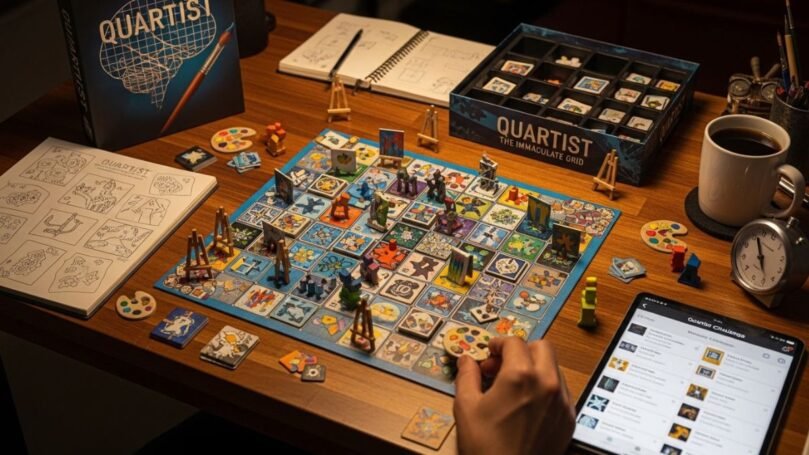
In the evolving world of online puzzle and trivia games, quartist has emerged as a term closely associated with thoughtful gameplay, pattern recognition, and mental discipline. When paired with the growing popularity of the Immaculate Grid, quartist represents a mindset rather than just a technique. Players who adopt a quartist approach focus on balance, logic, creativity, and precision, turning each grid into an intellectual experience rather than a rushed attempt at completion.
This article explores quartist in depth while connecting it naturally to the immaculate grid format. From understanding its meaning to applying it in daily gameplay, this guide explains why quartist thinking is becoming essential for players who want consistency, accuracy, and enjoyment.
Understanding Quartist in the Context of Immaculate Grid
The concept of quartist revolves around structured thinking and layered decision-making. In immaculate grid gameplay, each square demands a unique answer that fits two intersecting conditions. A quartist approach encourages players to divide the grid into mental segments, analyze each category carefully, and avoid repetition or rushed guesses.
Instead of focusing on speed alone, quartist thinking values accuracy, rarity of answers, and long-term improvement. This mindset transforms the grid from a simple trivia puzzle into a refined mental exercise where strategy plays a major role.
Why Quartist Matters for Immaculate Grid Players
Many players struggle with immaculate grid because they rely on memory alone. Quartist thinking adds structure to that memory. It encourages players to pause, evaluate categories, and predict overlaps before committing to an answer.
When quartist is applied correctly, mistakes decrease and confidence increases. Players start recognizing patterns across grids, learning which teams, players, or statistics frequently intersect. Over time, this structured method leads to more consistent results and higher rarity scores.
The Psychological Side of Quartist Gameplay
A major advantage of quartist thinking is psychological control. Instead of guessing impulsively, players remain calm and analytical. This reduces frustration and improves focus, especially when facing difficult grids with uncommon combinations.
The quartist mindset also supports learning. Every incorrect attempt becomes a lesson, helping players expand their knowledge base rather than feeling discouraged. This growth-oriented approach aligns perfectly with the daily nature of immaculate grid challenges.
How Quartist Improves Accuracy and Rarity
Accuracy and rarity are two major goals in immaculate grid. Quartist players aim to satisfy both by thinking several steps ahead. Rather than choosing the most obvious answer, they consider lesser-known options that still meet the criteria.
This approach leads to better rarity scores while maintaining correctness. Over time, quartist players develop an internal database of uncommon yet valid answers, giving them a competitive edge without sacrificing reliability.
Quartist Strategy Compared to Casual Play
The difference between quartist gameplay and casual play is intention. Casual players react to the grid, while quartist players plan their moves. They visualize the grid as a whole and anticipate how each answer affects the remaining squares.
This intentional approach prevents common mistakes such as repeating players across incompatible categories or blocking future options. it thinking turns the grid into a strategic puzzle rather than a memory test.
Applying Quartist Techniques Step by Step
To apply thinking effectively, players should begin by scanning the entire grid before entering any answers. This allows the brain to identify potential overlaps and difficult squares early. Next, players should prioritize rare or complex intersections while mental clarity is highest.
By working from the hardest squares to the easiest players reduce the risk of locking themselves out of correct answers later in the grid.
Quartist Gameplay Elements Explained
| Quartist Element | Description | Impact on Immaculate Grid |
|---|---|---|
| Structured Analysis | Breaking the grid into mental sections | Reduces errors |
| Pattern Recognition | Identifying repeated team or player trends | Improves speed |
| Rarity Awareness | Selecting uncommon valid answers | Increases score |
| Strategic Order | Solving difficult squares first | Prevents dead ends |
| Reflective Learning | Reviewing mistakes after completion | Builds long-term skill |
This table shows how thinking directly supports better performance and long-term improvement.
Quartist and Knowledge Expansion
One overlooked benefit of gameplay is knowledge expansion. Players are encouraged to research teams, players, and historical data outside of gameplay. This extra learning reinforces memory and makes future grids easier to solve.
Over time players notice a wider recall range and faster recognition of unusual category pairings. This transforms immaculate grid from a daily challenge into a continuous learning tool.
Common Mistakes Quartist Thinking Helps Avoid
Without structure, players often repeat obvious answers, overlook eligibility rules, or rush through unfamiliar categories. it thinking slows the process just enough to prevent these errors.
By approaching each square with intention, players reduce guesswork and increase confidence. This leads to a more satisfying experience, even on challenging days.
Why Quartist Encourages Long-Term Engagement
One reason immaculate grid remains popular is its daily format. it thinking complements this perfectly by encouraging patience and improvement over time. Instead of chasing perfection every day, players focus on steady progress.
This mindset keeps the game enjoyable and reduces burnout. it players treat each grid as a practice session rather than a test, which supports long-term engagement.
The Future of Quartist Gameplay
As immaculate grid continues to grow thinking is likely to become more common. Players are increasingly sharing strategies, rare answers, and analytical methods, reinforcing the value of structured play.
it is not about elitism or complexity. It is about respecting the puzzle, engaging the mind fully, and enjoying the challenge in a thoughtful way.
Final Thoughts
it represents a refined approach to immaculate grid gameplay that blends logic, creativity, and discipline. By focusing on structure, rarity, and learning, players transform each grid into a meaningful mental exercise.
Whether you are new to immaculate grid or a seasoned player, adopting thinking can significantly improve accuracy, confidence, and enjoyment. It turns a daily puzzle into a personal challenge of growth and mastery.