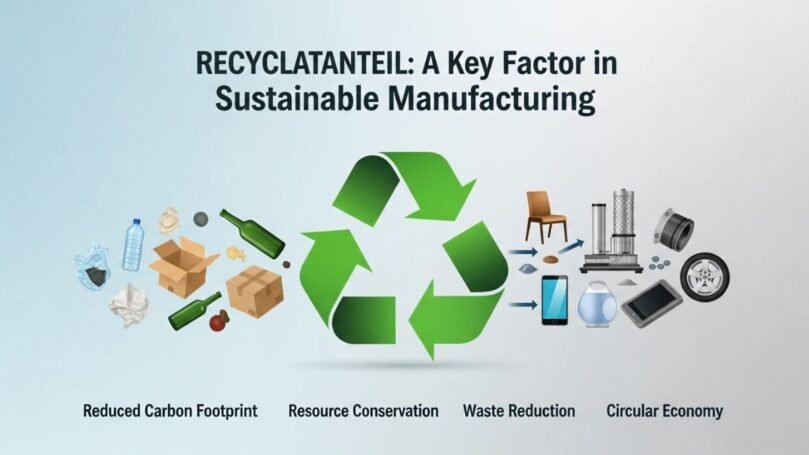
In today’s world, sustainability and environmental responsibility have become essential priorities for individuals, businesses, and governments. One term that is gaining attention in this space is recyclatanteil. Many people search for recyclatanteil to understand its meaning, relevance, and how it contributes to eco-friendly practices.
The term recyclatanteil is often used in environmental and industrial contexts to describe the proportion of recycled material used in a product or process. In simple terms, recyclatanteils reflects how much of a product is made from recycled content rather than new raw materials.
Understanding recyclatanteil is important because it helps measure sustainability efforts and encourages the use of recycled resources. In this article, we will explore the concept of recyclatanteils, its benefits, applications, and role in promoting a greener future.
Recyclatanteil Meaning and Basic Concept
To fully understand recyclatanteils, it is important to break down the concept. The term is commonly associated with the percentage of recycled material present in a product.
For example, if a plastic bottle contains 50% recycled material, its recyclatanteil would be 50%. This percentage indicates how much of the product is made from previously used materials.
The concept of recyclatanteils is widely used in industries such as manufacturing, packaging, and construction. It helps companies measure their sustainability performance and meet environmental standards.
Table: Understanding Recyclatanteil
| Aspect | Explanation | Example |
|---|---|---|
| Definition | Share of recycled content | 50% recycled plastic |
| Measurement | Percentage value | 30%, 60%, 80% |
| Purpose | Track sustainability | Reduce waste |
| Application | Used in industries | Packaging, textiles |
This table shows how recyclatanteils is applied in practical situations.
Recyclatanteil and Environmental Sustainability
One of the main reasons recyclatanteils is important is its contribution to environmental sustainability. Using recycled materials reduces the need for extracting new raw resources, which helps conserve natural ecosystems.
When companies increase their recyclatanteil, they reduce waste and lower their environmental impact. This also helps decrease pollution and energy consumption associated with producing new materials.
For example, recycling plastic requires less energy than producing it from raw materials. By increasing the recyclatanteil, industries can significantly reduce carbon emissions.
Sustainability efforts often focus on increasing the use of recycled content, making recyclatanteils a key indicator of environmental responsibility.
Recyclatanteil and Industrial Applications
Industries play a major role in adopting and promoting recyclatanteils. Many sectors use recycled materials to improve sustainability and meet regulatory requirements.
Manufacturers often include recycled content in products such as packaging, electronics, and building materials. The level of recyclatanteil can vary depending on the type of product and industry standards.
Table: Recyclatanteil in Different Industries
| Industry | Use of Recyclatanteil | Example |
|---|---|---|
| Packaging | Recycled plastic or paper | Bottles, boxes |
| Construction | Recycled concrete or metal | Building materials |
| Textile | Recycled fibers | Clothing |
| Electronics | Reused components | Devices |
These examples show how recyclatanteils is integrated into various sectors.
Recyclatanteil and Consumer Awareness
Consumers are becoming more aware of sustainability issues, and many prefer products with higher recyclatanteils. This awareness is driving companies to adopt eco-friendly practices.
Products often display information about their recycled content, allowing consumers to make informed choices. A higher recyclatanteil can make a product more appealing to environmentally conscious buyers.
This shift in consumer behavior encourages businesses to increase their use of recycled materials. As a result, recyclatanteils is becoming an important factor in marketing and product design.
Recyclatanteil and Government Regulations
Governments around the world are introducing regulations to promote recycling and reduce waste. These regulations often require companies to meet certain recyclatanteil targets.
For example, packaging laws may mandate a minimum percentage of recycled content in products. These policies help ensure that industries contribute to sustainability goals.
By setting standards for recyclatanteils, governments can encourage the use of recycled materials and reduce environmental impact.
Compliance with these regulations is essential for businesses operating in regulated markets.
Recyclatanteil and Economic Benefits
Increasing recyclatanteils is not only beneficial for the environment but also for the economy. Recycling creates jobs and supports industries involved in waste management and material recovery.
Using recycled materials can also reduce production costs in some cases. For example, recycled metals often require less energy to process compared to raw materials.
Table: Economic Benefits of Recyclatanteil
| Benefit | Description | Impact |
|---|---|---|
| Cost savings | Lower material costs | Increased profitability |
| Job creation | Recycling industry growth | Employment opportunities |
| Resource efficiency | Reduced waste | Sustainable economy |
| Market demand | Eco-friendly products | Business growth |
These benefits highlight the importance of recyclatanteil in economic development.
Recyclatanteil and Challenges
Despite its advantages, increasing recyclatanteil comes with challenges. One of the main issues is the availability of high-quality recycled materials.
Not all materials can be easily recycled, and some lose quality during the process. This can limit the percentage of recyclatanteil that can be achieved in certain products.
Another challenge is the cost of recycling infrastructure. Efficient systems are required to collect, sort, and process materials.
However, ongoing innovation and investment are helping overcome these challenges and improve recycling processes.
Recyclatanteil and Future Trends
The future of recyclatanteils looks promising as sustainability becomes a global priority. Advances in technology are making recycling more efficient and expanding the range of materials that can be reused.
Companies are increasingly setting goals to increase their recyclatanteils and reduce their environmental footprint. This trend is likely to continue as consumers demand more sustainable products.
Innovations such as circular economy models are also supporting the growth of recyclatanteil. These models focus on reusing materials and minimizing waste.
As awareness grows, recyclatanteils will play a key role in shaping sustainable practices.
Conclusion
The concept of recyclatanteil is central to modern sustainability efforts. It represents the percentage of recycled material used in products and serves as an important indicator of environmental responsibility.
By increasing recyclatanteils, industries can reduce waste, conserve resources, and lower their environmental impact. Consumers also benefit by having access to eco-friendly products.
Despite challenges, the future of recyclatanteil is bright. With continued innovation and commitment, it can help create a more sustainable and efficient global economy.
Understanding and promoting recyclatanteils is essential for building a greener future and ensuring long-term environmental health.